

French artist Claude Monet is famous for his ‘Water Lilies’. Painted between 1897 and 1926, the 250 artworks of a lily pond in his garden are admired even today for their atmosphere, colors, and brush strokes.
At first, Monet painted the lilies in airy shades of blue, green, and purple. But midway through the series, he swapped his color palette for smoldering reds and muddy browns.
“Eh?” went the perplexed critics. What was this?
This was, quite simply, cataracts in Monet’s eyes, which changed the way he saw things.
After having surgery at the age of 83 to remove the cataracts, Monet went back to painting in pinks and greens.
What are cataracts
Behind the pupil (the little black dot in the center of the eye) is a clear lens that directs light toward the retina to create the images we see.
The transparent lens is made up of protein cells. Over time, these proteins break down and clump together to create a cloudy patch on the lens. This cloudy patch is the cataract.
Cataracts usually start out as a grayish or milky white spot. The spot grows larger with time, and in more advanced stages the color of the cataracts can turn yellow or even brown.
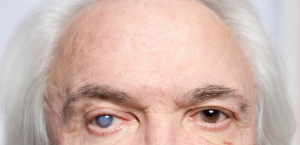
Comparison of an eye with a cataract and a normal eye
What causes cataracts
The main cause of cataracts among senior adults is the natural process of growing older. Statistics to pinpoint what percentage of people get cataracts show that 1 in 5 senior adults aged 65 years has cataract in one or both eyes. By the age of 75 years, this number rises to 1 in 2 adults.
Cataracts may also be caused by:
Diabetes: Persons with diabetes are at higher risk of developing cataracts. According to the CDC, 1 in 3 patients diagnosed with type 2 diabetes has cataracts.
Medications: Occasionally, cataracts may form because of certain medications, such as statins to lower cholesterol, antiarrhythmics to treat an irregular heartbeat, medications that treat gout by reducing uric acid in the blood and kidneys, and corticosteroids used to manage allergies.
Smoking: The thousands of chemicals in cigarettes, many of them highly toxic, create oxidative stress that speeds up the formation of cataracts.
Injuries: Injuries that puncture the eye, as well as blunt injuries like getting hit in the eye with a ball, or a punch in a fistfight, can cause cataracts. Regular over-exposure to the sun also puts your eyes at risk.
How do you know if you have cataracts
Cataracts often develop gradually, and many people don’t notice them in the earlier stages.
One of the most common warning signs of age-related cataract is fuzzy, blurred vision where it feels like you’re looking out through a dirty window.
This happens because the milky, foggy patch in the lens affects the way light passes through.
At thinner parts of the cloud, some amount of light may just be able to go through. Thicker, more opaque areas will stop any light from going through at all. The unevenness of light entering your eyes distorts and blurs the image being created on your retina.
Other signs of cataract include:
- Colors look faded and washed out: Each of our eyes contains approximately 6 million color receptors called cones. These cones identify colors in brightly lit environments. Because the light coming to the cones is patchy and uneven after passing through the cloud on the lens, the cones cannot detect colors properly.
- Everything is yellow: Violet, blue, and indigo colors have very short wavelengths. When light hits the cataract, the cloudy patch absorbs these short wavelengths. The only colors that manage to get past the cloud are the ones with longer wavelengths: red, orange, yellow, and some green.
This explains why Monet’s cataracts completely changed his art. The lilies he painted were still purple and pink in real life, but he could see them only as blobs of yellow and brown.
- Driving at night unnerves you: The opacity of the cataract and the generally low levels of light at night combine to make it very difficult to see well in the post-sunset hours.
Even though there are approximately 120 million light receptors called rods in each eye, they can’t do their job because the cataract blocks what faint light may be available. This may make driving at night especially stressful and dangerous.
- Bright light makes your eyes hurt: The lens in our eyes is designed to collect light and direct it toward one single point on the retina. But because of the cloudy cataract, the light doesn’t collect.
Instead, it scatters all through the eyeball, putting strain on the eyes. The brighter the light flooding into the eyes, the more sensitive your eyes grow, and the more they hurt.
- Seeing a ring or halo around a light: Light scattering all over the eye may cause you to see a halo or ring around light sources such as streetlamps and vehicle lights.
- Seeing double: Since the clouded lens stops light from gathering at one single point on the retina, the image you see may be replicated, either side by side or above and below. This may cause headaches, dizziness, and nausea.
- You give up hobbies: People with cataracts need more light to perform activities that require close-up vision. But because brighter light hurts your eyes, reading, sewing, or crafting can become more difficult, frustrating, tiring, and you may give them up without really knowing why.
Cataracts vs glaucoma
Although both reduce your ability to see, cataract and glaucoma are two distinct eye problems. Cataract is when the lens in the eye develops a cloudy patch.
Glaucoma happens when the optic nerve of the eye is damaged. Your eyes produce a clear liquid called aqueous humor to keep the eyeball inflated at a steady pressure. Fresh aqueous humor pushes older liquid through drainage canals. If the older aqueous humor does not drain properly, the amount of liquid builds up and puts pressure on the eye system, including the optic nerve at the back. Damage to this nerve results in glaucoma.
Treating cataracts
The only definitive treatment for cataracts is surgery. Modern surgical methods have made the procedure simple, generally painless, and quick, with the average cataract surgery taking between 15 and 20 minutes, depending on the size of the milky patch.
In the most routine kind of cataract surgery, the surgeon numbs the eye and uses ultrasound waves to break the cloudy lens into microscopic pieces.
Using a fine blade or laser, the surgeon then makes a tiny cut, about half the width of a standard pencil-top eraser, in cornea (the outermost covering of the eye).
The cataract cloud is sucked out of this cut, and a new, artificial lens made of silicone, acrylic, or other form of plastic, is inserted.
Cataract surgery on Medicare
For senior adults enrolled in Original Medicare, “Medicare may cover cataract surgery that implants conventional intraocular lenses, depending on where you live.”
Most Medicare Advantage plans accommodate cataract surgery, as well as prescriptions for eyeglasses and lenses.
How to prevent cataracts
Cataracts are not entirely preventable, but you can slow down their formation and progression in the following ways:
- Shield your eyes from excessive sun exposure with dark sunglasses. Make sure they’re labeled “UV400” or “100% UV protection” to get the highest level of protection.
- Wear protective eyewear when playing sports, using power tools, or in any situation where there’s even the tiniest risk of an object piercing your eye.
- Quit smoking. Here are some good resources that may help.
- Keep blood sugar levels under control.
Make sure to schedule an eye exam every year. Let your doctor know you specifically want your eyes checked for cataract formation. By keeping tabs on the cataract together, you and your care providers will be able to take better care of your eyes for longer.