
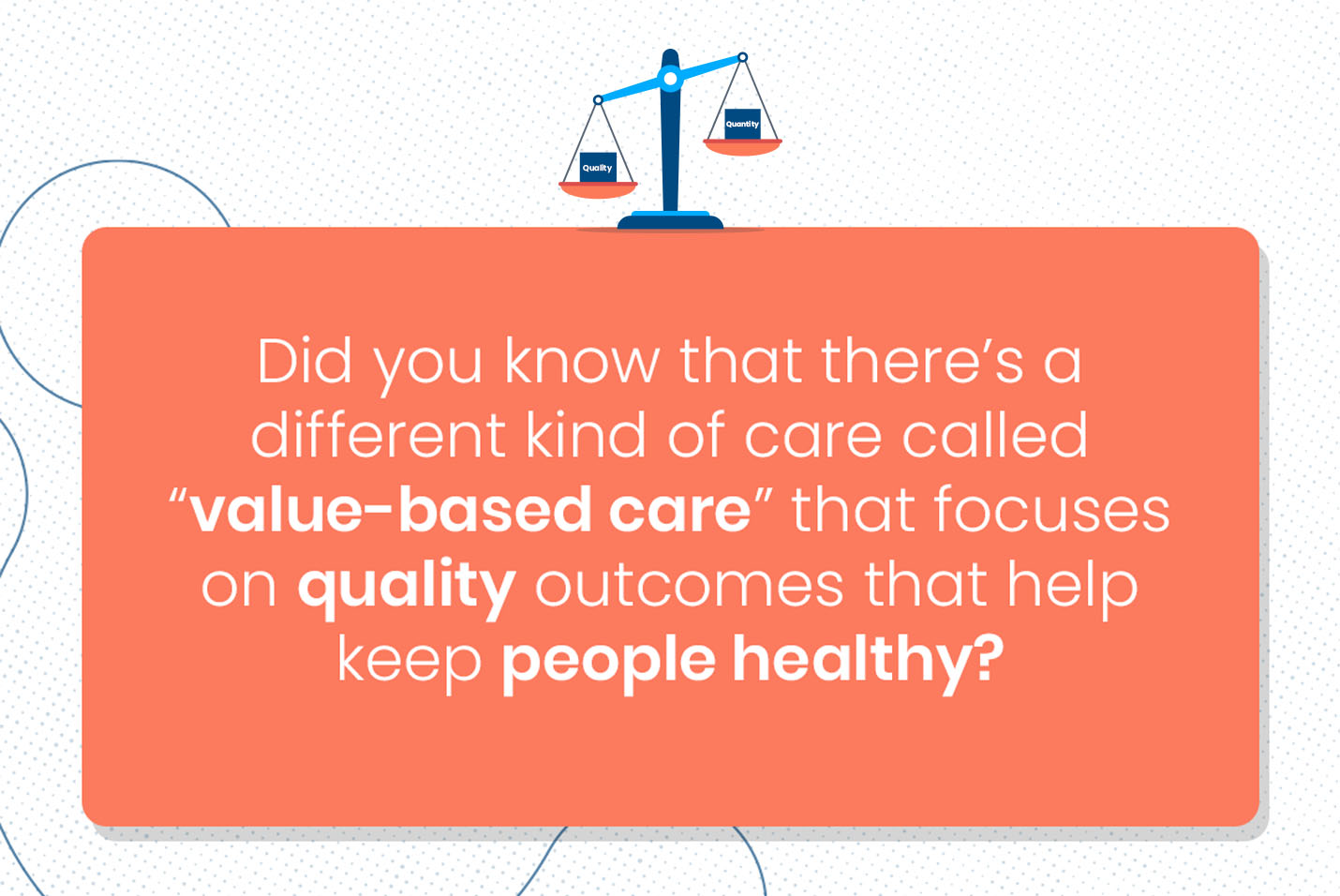
The way healthcare is delivered in the US has been evolving in recent years. A new care model, called “value-based care”, helps individuals, especially those aged 65 years and up stay as healthy as possible as they age through preventive healthcare, letting them stay on top of their health and detect things before they become an issue.
Read more: Your rights as a patient
What are value-based care models?
Value-based care (VBC) is a form of providing healthcare in which doctors and clinics are incented based on how healthy they keep their patients. Whereas in traditional fee-for-service models, doctors are not incented to keep people healthy, but paid based upon each service that they provide to the patient.
Because it values quality, evidence-based care over quantity of services, value-based care focuses on health “outcomes” or results, like keeping blood pressure under control, reducing hospital visits, reducing A1C levels in diabetics and more.
This is different from the traditional fee-for-service model, where providers get paid for each visit, or each test and/or procedure they perform, regardless of the outcome.
Important terms to know:
- Value-based healthcare: A prevention-based care model where doctors are rewarded for keeping people healthy.
- Fee-for-service: A model where doctors are paid for every service they provide.
Quick look: Fee-for-service vs Value-based care
| Feature | Fee-for-service | Value-based care |
|---|---|---|
| Payment | The more services performed, the more the doctors get paid. | Doctors are rewarded when they keep their patients healthy and keep conditions under control. |
| Focus | Quantity of care provided. | Quality of care provided. |
| Example | Doctor orders several blood tests when only one is needed to ensure they didn’t miss anything or to eliminate possible causes. | Doctors practice preventive evidence-based medicine to help patients stay healthy and prevent unnecessary illness as they age. |
| Goal | Treat illness when it occurs. | Prevents illness, detects issues early and keeps any conditions under control. |
In fee-for-service, a doctor will be paid each time they see a patient. In value-based care, the doctor doesn’t charge for each visit and is rewarded for helping the patients stay healthy or get their health under control.
Click here to find an internal medicine doctor near you
Why value-based care matters, especially for people on Medicare
Many adults aged 65 years and up have chronic conditions like diabetes, heart disease, or COPD. If not managed properly, these may become gateways for other health problems.
To keep chronic conditions under control, you need attentive doctors and care teams, and lots of follow-up.
This means they will spend more time with you during appointments and will see you more often to make sure your health is under control and stays under control through preventive screenings, immunizations, and more such as lifestyle coaching.
What you get in value-based care
Instead of being rushed during appointments, patients in a value-based care system get:
- A care team made up of your primary care physician, nurses, dietitians, care managers, specialists, and consultants. They all work together to keep you in good health.
- Regular check-ins and support. For instance, after prescribing a new prescription the care team will check in on you to see how you’re doing.
- Focus on preventing problems before they start. For example, you will receive an Annual Wellness Visit and regular check-ins throughout the year, even if you feel great, to make sure that early indicators of health are all still within normal ranges.
- Care providers help you manage medications, appointments, and find answers to your questions. In value-based care, they understand that your mental health and peace of mind are just as important as your physical health.
How value-based care works: An example
Mr. Johnson is 72 years old. He has diabetes, high blood pressure, and suffered a stroke some years ago. The last few days, he’s had more trouble than usual urinating.
In a fee-for-service model:
- Mr. Johnson sees his doctor for 15 minutes. The meeting feels rushed, which makes Mr. Johnson anxious, and he forgets to mention the pain in his side.
- The doctor adjusts Mr. Johnson’s medications and tells him to return in 3 months.
- Mr. Johnson is not very clear about how to manage his illness at home. He has questions, but nobody at the clinic seems interested in answering them.
- Some days later, Mr. Johnson develops sepsis from the urinary tract infection (UTI) and ends up spending a week in the hospital.
In a value-based care model:
- Mr. Johnson is assigned a care team. Since his diabetes is fairly advanced, his team schedules a regular appointment with an endocrinologist, as well as with a podiatrist who checks his feet for gangrene.
- He is equipped with a glucometer and ambulatory blood pressure monitor. These devices are connected to his clinic’s computers. This way, his care team can keep an eye on his health remotely.
- Because the team makes sure to remain updated on his chronic conditions, Mr. Johnson focuses on telling his doctor about the pain in his side. The doctor ascertains that it’s a UTI, and prescribes a course of treatment.
- His medications are monitored, and he gets plenty of guidance on how to manage his conditions.
- Mr. Johnson feels more in control of his health and is able to stay out of the hospital.
In short, with value-based care, Mr. Johnson gets better care, less stress, and more support.
Benefits of value-based care for patients
- More time with your doctor: Many patients report their appointments feel rushed and they don’t get a chance to properly talk to their doctor. In value-based care models, your doctor’s goal is to keep you in good health, so they give you plenty of time and listen closely to your concerns — understanding that you know your body best.
- A team approach: You will have an entire care team looking after you, including nurses, social workers, and specialists who work together to help you feel your best.
- Focus on prevention: Your care team does not want to simply treat your illness. They want to keep you from getting sick in the first place and bring any conditions under control so you can focus on what matters most.
- Lower costs: Because care is coordinated with your care team and specialists, your records are shared with your providers. This helps lower the chance that you will be unnecessarily overtreated or overmedicated.
- Improved health outcomes: Since the aim of value-based care focuses on preventive care, there is better management of conditions and lower risk of sudden hospitalization.
Read more: Is it a heart attack, or just gas?
Frequently Asked Questions about value-based care
- What is value-based care in simple terms?
Value-based care is a system in which doctors are rewarded to keep you healthy, not just to treat you when you’re sick. - Is value-based care only for people aged 65 years and above?
No, but it’s especially useful for adults aged 65 and up as 80% of chronic conditions are lifestyle-related and risks are increased with age. However, many of these conditions can be well managed with the right type of care, and sometimes even reversed. - Is fee-for-service still used?
Yes, but clinics are increasingly shifting to value-based models because they see how it helps keep people feeling their best. IntraCare Health Centers use the value-based care model. - Do Medicare Advantage plans use value-based care?
Yes, some Medicare Advantage plans give you access to value-based primary care providers because the health insurers see how well this type of care helps keep their members healthy. However, be careful, not all Medicare Advantage plans offer access to value-based primary care providers. You will need to ask either the health plan directly or consult with a licensed Medicare broker. - What are the results of value-based care?
Results vary based upon the individual’s unique situation but generally, the value-based care model and value-based care providers are known for their ability to help people stay healthier and control chronic conditions.