
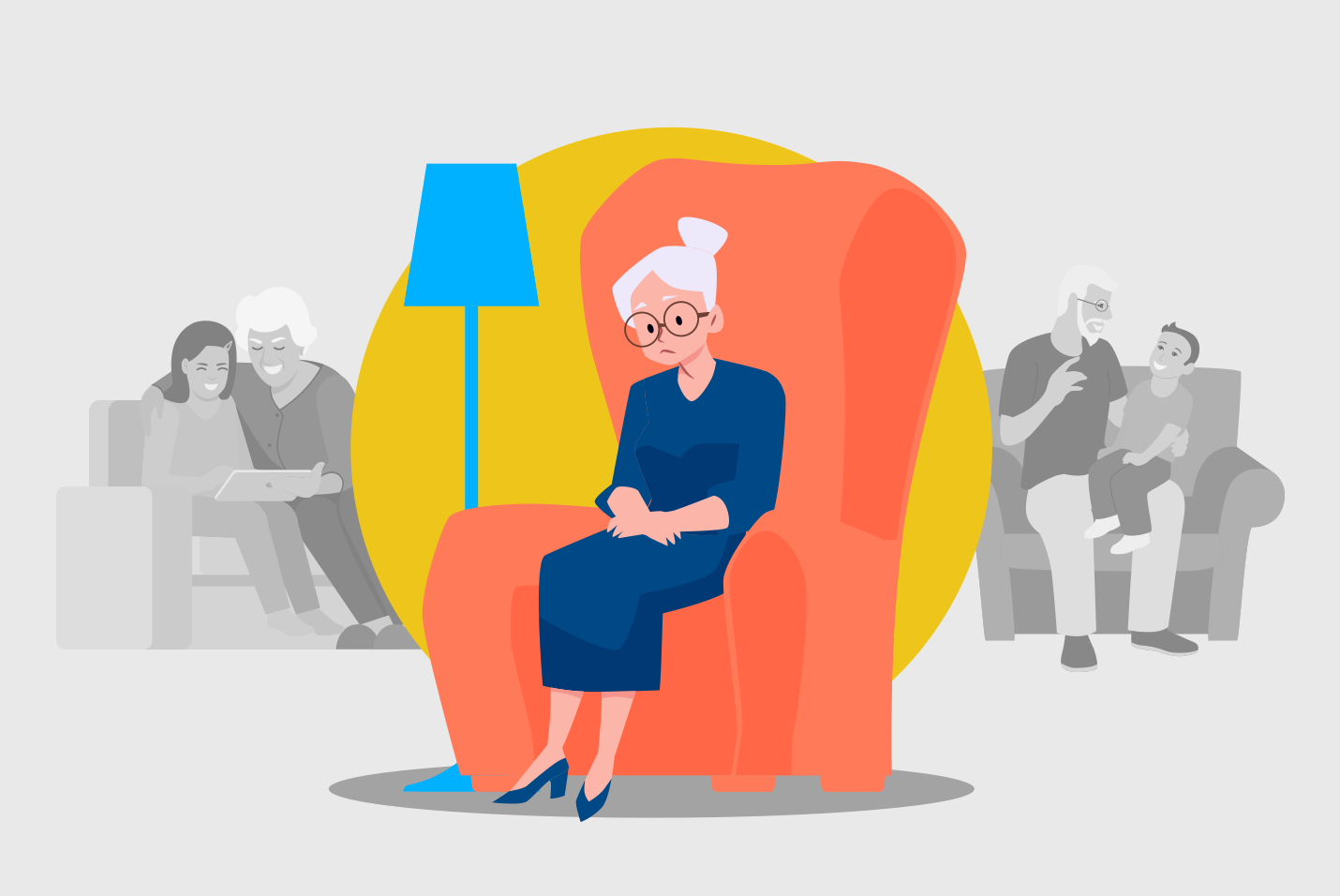
Social isolation is a serious problem among vulnerable senior adults. It can put their health at risk, and 1 in 3 Americans reports not having the meaningful interactions, communication, and contact with other people we all need to thrive.
Senior adults become socially isolated when they are cut off from their family, friends, and communities, usually because of circumstances beyond their control. This can lead to a number of health issues, both physical and mental, and may exacerbate existing illnesses.
Among older adults, some reasons for becoming socially isolated are:
- Depression brought on by health conditions
- Reduced physical mobility
- Being a full-time caregiver for a partner or parent
Isolated because of depression brought on by illness
Sudden medical events such as a heart attack can be life-altering, and many people are not equipped to deal with the overwhelming emotional aftereffects.
When 68-year-old John had a stroke, he went from being the life of the party to refusing to meet visitors or even responding to phone calls.
Trapped in bed, unable to move, he spiraled into severe depression. He took his anger and frustration out on friends who had rallied round. As a result, many began to avoid him, communicating only as much was necessary. Others simply disappeared.
John’s once lively, vibrant world has now shrunk to just his primary carer and the physical therapist who comes three days a week. His children, dealing with their own workplace and family issues, can’t cope with his unhappiness. They call every day, but prefer to speak mainly to their mother.
What to do: Talk to a professional mental health therapist
Friends and neighbors certainly mean well when they come over to give a patient company, but they are not trained to deal with problems as severe as a major depressive disorder.
They come with the intention of cheering their buddy up. They leave feeling saddened, upset, sometimes shaken and resentful. Some don’t return for a second visit.
Professional therapists, on the other hand, have the knowledge, expertise, skills, and tools to help patients who are struggling with changed health circumstances. Therapists can guide the patient to understand and accept their new life, move on, and reconnect with loved ones.
Isolated because of reduced mobility
After months of physical therapy, John was able to get back on his feet. But instead of striding along with confidence like he used to, he shuffles uncertainly with the help of a rollator. This is embarrassing for him and he doesn’t want to be seen in public like this. That’s why he mostly stays home.
As he no longer drives, it’s been a while since he’s attended a meeting of his guitar club. He used to spend hours there with his buddies, talking about his favorite guitars. At home, no one shares his hobby. There’s no one he can talk to.
What to do: Go online
The internet is full of hobby groups and clubs for everything from your more traditional quilting and hot rod-building, to the weird and weirder.
Being part of an online hobby club has several advantages. For one thing, most mainstream clubs don’t discriminate on the basis of age, gender, or financial status. Anyone and everyone can join, or even start a club of their own without any monetary or material investment.
For another, you don’t have to actively engage from the get-go. It’s completely okay to just hang out in silence until you’re ready to say something. This takes a lot of pressure off senior adults who want to ease out of social isolation, but may be nervous about meeting new people.
Isolated because you are the primary caregiver
Being a full-time or primary carer for an aging spouse, partner, or parent can quickly wipe out your friendships and social connections.
John’s wife, Susan, is his primary caregiver. Not only is it taking a toll on their marriage, but Susan is also losing touch with her friends.
She doesn’t go to the park for tai chi anymore, she doesn’t have brunch with the girls anymore. Her friends got so fed up with John’s needs continually interrupting their phone conversations that they no longer call her.
What to do: Don’t be a martyr
Caregivers cancel social plans frequently, which may cause their friends to eventually stop including them in activities.
Sometimes, plans are cancelled because the person genuinely can’t get out.
Sometimes, it’s because caregivers feel guilty for having fun when their loved one is suffering.
Don’t do that to yourself. Hard as it may be, do not sacrifice your opportunities to socialize just because your partner cannot socialize.
In fact, be proactive in maintaining your social life. It doesn’t have to be anything major; just set aside a fixed amount of time, such as one morning a week or an hour a day, for your mental wellbeing. This should be made a regular part of your routine, and this should be non-negotiable.
Let your friends know you’d like to catch up with them, without interruptions, at this time. Arrange for respite care to look after your care recipient. When guilt rears its unattractive head, remind yourself that a happy caregiver gives happy care.
Let your doctor know how you’re feeling
When the friendly nurses or reception staff at your healthcare center ask, “How are you feeling?”, it’s not out of polite courtesy. They really do want to know how you are feeling.
A good care provider understands that lots of factors must come together to make a truly holistic treatment plan. These include medication, exercise, diet and nutrition, and your social environment.
When you tell them truthfully, without any fear or embarrassment, that you have no one to talk to, they may be able to help you in different ways. They might suggest a therapy group, an activity club, or Senior Companion programs in your area. They may even tell you of places where you can volunteer and create a fulfilling social life by being a friend to someone in need of one.