
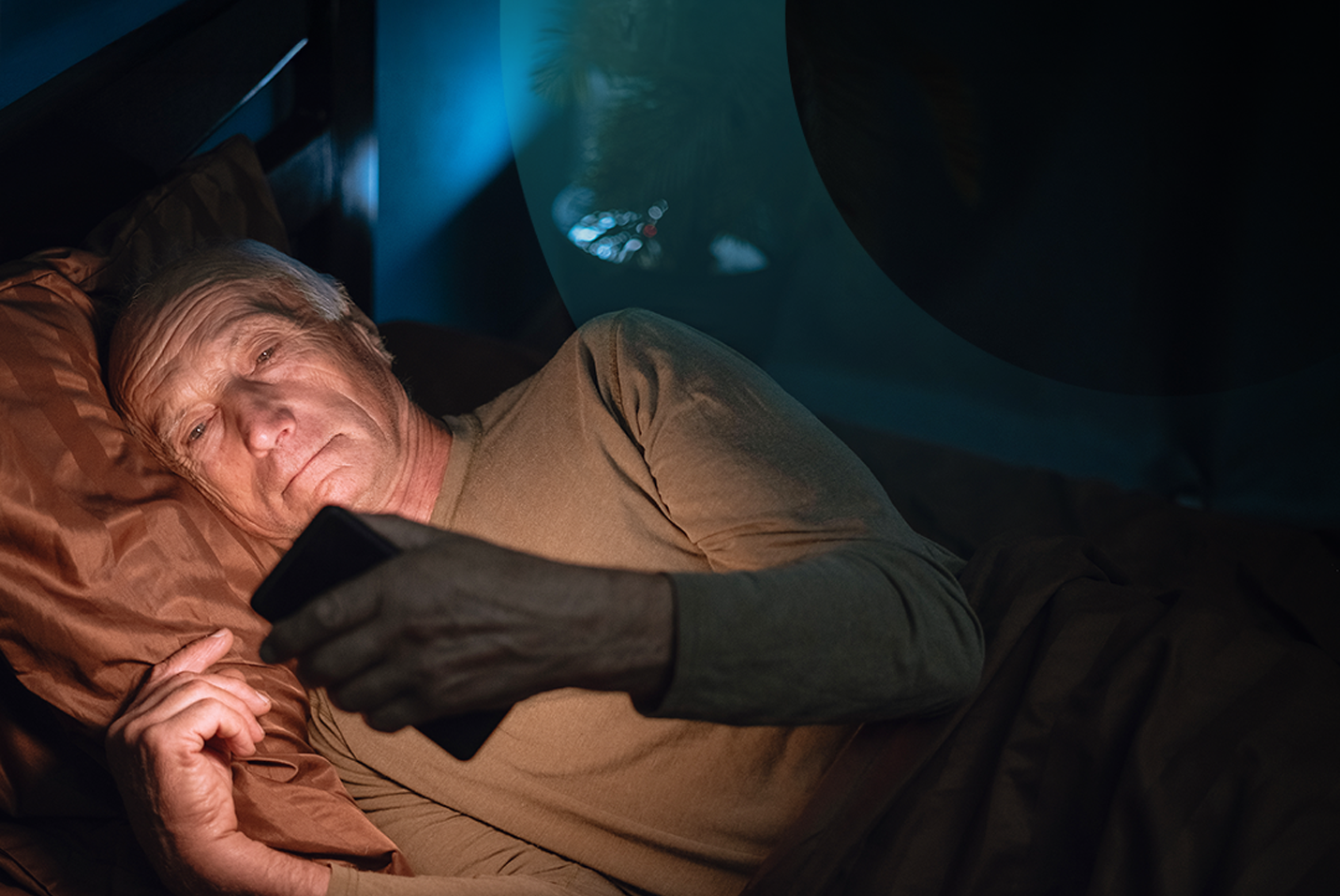
There’s a reason why sleep is as important as food, water, and air: it is essential for homeostasis. Homeostasis is the biological mechanism through which your body maintains internal balance and stability to deal with possible threats from external factors.
In other words, homeostasis is how living beings keep themselves alive, and sleep is crucial to the process.
In fact, sleep is so important that it is classified as a basic human right and the effects of sleep deprivation can be so dangerous that deliberately depriving a person of sleep is recognized as a form of torture prohibited by international law.
Is sleep deprivation the same as insomnia?
People often confuse sleep deprivation with insomnia. The two are not the same thing, but are closely related since insomnia is one of the many factors that contribute to sleep deprivation.
Insomnia is the involuntary inability to go to sleep, or to stay asleep long enough for your body to get the regenerative rest it needs. People who suffer from insomnia want to sleep, they try everything possible to fall asleep, but they are simply unable to sleep.
Sleep deprivation happens when you stay awake for longer than you should, and don’t get the recommended 7-9 hours of sleep in every 24-hour cycle. Sleep deprivation can be either involuntary or deliberate.
How to know if you are sleep deprived
There are many symptoms of sleep deprivation. The most common symptom is feeling drowsy whenever you should be awake. Other symptoms of being sleep deprived include:
- Nodding off, often for several minutes
- Microsleeping, or falling asleep for a few seconds
- Irritability, moodiness, and feeling burned out
- Being unable to concentrate
- Cognitive decline, forgetfulness, and other memory issues
- Feeling tired and weak
- Increased anxiety and/or depression
- Catching viral illnesses and infections frequently
- Slowed reaction speed
- Taking longer to complete a task, or making too many mistakes while doing a task
- Weight gain
- Hallucinations, or seeing/hearing/feeling things that are not there
Causes of sleep deprivation
Sleep deprivation can be caused by several things, including
- Insomnia
- Poor sleep hygiene
- Piled up sleep debt
- Breathing disorders and illnesses such as sleep apnea and chronic obstructive pulmonary disorder (COPD)
- Drinking too much alcohol
- Drinking coffee or caffeinated beverages too close to bedtime
- Taking prescription medicines at the wrong time
- Neurological disorders such as Parkinson’s disease, Alzheimer’s disease, and Restless Legs Syndrome (RLS)
- Getting up multiple times at night to use the bathroom because of diabetes, urinary tract infections, or prostate issues
- Exercising too close to bedtime
- Being overstimulated near bedtime because of online browsing or gaming
Sleep deprivation in informal primary carers
Among senior adults, a big reason for sleep deprivation may be that they are the informal primary carer for their spouse or partner. Studies report that 4 out of 5 senior adults suffer from sleep deprivation as a direct consequence of caregiving. When caregivers do not get the quality and quantity of sleep they need, their own health issues are exacerbated.
What is sleep hygiene and why does it matter?
Sleep hygiene refers to your sleep environment and the habits and practices that make up your bedtime routine. To develop good sleep hygiene:
- Prioritize sleep
You’ve left your wild partying nights firmly in the past and now love nothing more than getting into bed at 9pm. But that doesn’t mean you’re going to sleep, does it? You have TikToks to watch, and heated Facebook debates to rage in, and a new episode of your favorite web series to catch up on. Before you know it, it’s 3 in the morning.
Experts recommend turning off your smartphones, tablets, and other gadgets at least 30 minutes before climbing into bed. It may take a little discipline, but getting into this habit may stop you from caving in to the temptation of “just 5 minutes more”.
If you must do something to unwind, read a book. Research show that people who read in bed sleep better, but the books should be in print form rather than e-readers because of blue light-emitting screens.
Blue light is high-energy visible light that comes mostly from the sun. Blue light is also emitted by fluorescent bulbs and from electronic screens like computers, smartphones, e-readers, and TVs.
Blue light absorbed by our eyes during the day makes us alert, improves cognitive function, and helps regulate our circadian rhythm. At night, this same blue light tricks our brain into thinking it’s still daytime. This disrupts the brain’s production of melatonin, a hormone that soothes, relaxes, and helps promote sleep.
This means that even if you ‘fall asleep’ in front of the TV, you don’t actually get to sleep as blue light from the screen continues to penetrate your closed eyelids. And if you haven’t muted the TV, the sound will also disrupt your senses and prevent restful sleep.
- Wake up to schedule
Sleeping in is a luxury best avoided if you want to avoid the effects of sleep deprivation, as it throws your circadian rhythm off-kilter.
The circadian rhythm is your body’s internal clock and it is influenced by your exposure to light and darkness. The circadian rhythm regulates when you sleep and wake up, enabling your body’s various systems — circulatory, digestive, metabolic, immune, etc — to function at their peak.
To optimize your circadian clock, wake up at the same time every morning. Go out to make the most of daylight (and also absorb plenty of vitamin D). Towards the end of the day, during sleep hours, keep your bedroom as dark as possible. If an absolutely darkened room is not feasible for safety reasons, invest in a good, blackout sleep mask.
- Make your bedroom pleasant
A good, comfortable mattress, pillows, and bed linen can make a world of difference to your sleeping routine. Clean, uncluttered environments are calming, so going Marie Kondo on your room is a good idea.
A research study on aromatherapy with essential oils showed that certain scents like lavender, peppermint, and bergamot could enhance sleep quality in cardiac patients. But you should never light aromatherapy candles at bedtime as they are a fire hazard. Instead, try an electric essential oil diffuser, or sprinkle a few drops of lavender essential oil on a cotton ball and keep it on your nightstand.
- Get overnight help
If you are the primary carer for a spouse or partner, it can really help to have a professional caregiver, friend, or relative take over one night a week. Arrange to sleep in a different room if possible to avoid being disturbed during the night.
Dangers of being sleep deprived: Microsleep
If you have ever zoned out, blanked out, or can’t remember walking the last block home, this could be an episode of microsleep.
Microsleeping is a particularly dangerous aftermath of sleep deprivation. Microsleep episodes are sudden and short, lasting no more than a few seconds. They also happen so fast that sometimes you don’t even realize you went to sleep. In some cases, your eyes might not even be closed.
‘When’ and ‘where’ are irrelevant concepts to a sleep-deprived human body desperate for a bit of rest, so you can never know when you will have a microsleep episode. A microsleep episode while driving may result in a car crash. In situations where you must remain alert at all times, such as supervising the grandkids, a microsleep episode can have devastating consequences.
When to speak to a doctor
You can usually sort out deliberate sleep deprivation by practicing good sleep hygiene. If that doesn’t work, then the reason for your poor sleep could be involuntary and quite likely a health concern.
Your doctor may want to check for any underlying illnesses, may adjust your medications, or may recommend sleeping aids like melatonin supplements.